Back to work
Elsewhere Design for All Forestry Industrial Form

Elsewhere · Design across fields

Elsewhere,
from automotive and health care.

Most of my career sits in cars and in health care. Elsewhere, along the way, I designed for people who cannot see the interface, for a machine that plants a forest, and for the language of industrial form. Three fields. Three briefs. Each one made the next project sharper.

UX is not pixels on a screen. It is the moment before the pixel. It is the person, the object, the sound, the hand, the room. Sometimes the best interface is no interface at all.

01

Design for All · Screenless interaction

The forgotten user.

Most washing machines are designed for eyes that read the panel. What if you cannot? The brief asked how a visually impaired person does a load of laundry, blind, in a way that feels dignified rather than a workaround. The answer was to remove the screen entirely and let the clothes tag be the interface.

0

People worldwide who are completely blind

0

Products in the market to support them doing their laundry

0

Born blind. The rest lose sight later and cannot read braille

0

Care about the cleanliness of their clothes. A sensitive point of independence

The idea

Design without a screen is design that trusts touch, sound and the objects people already know. UX is not the pixel. It is the person standing in front of the machine, holding a shirt, wanting to do laundry without asking for help.

Beautiful is not always visible. Sometimes beautiful is the thing that lets someone live their day unassisted.

The interaction, without a screen

Six moves. No display. No braille.

01

Start

Approach the machine. No screen to interpret. A single tactile knob greets the hand.

02

Scan

Bring a shirt to the scanner. The tag holds every instruction the machine needs.

03

Feedback

Sound and haptics confirm the load. The machine speaks back in a voice the ear already knows.

04

Adjust

Rotate the knob for wash type. Position replaces reading. A click at each mode. Confidence by feel.

05

Insert

A single opening. Gravity does the sorting. No wrong door, no wrong drawer.

06

Confirm

A closing tone. The laundry is done. Nothing asked of the eyes.
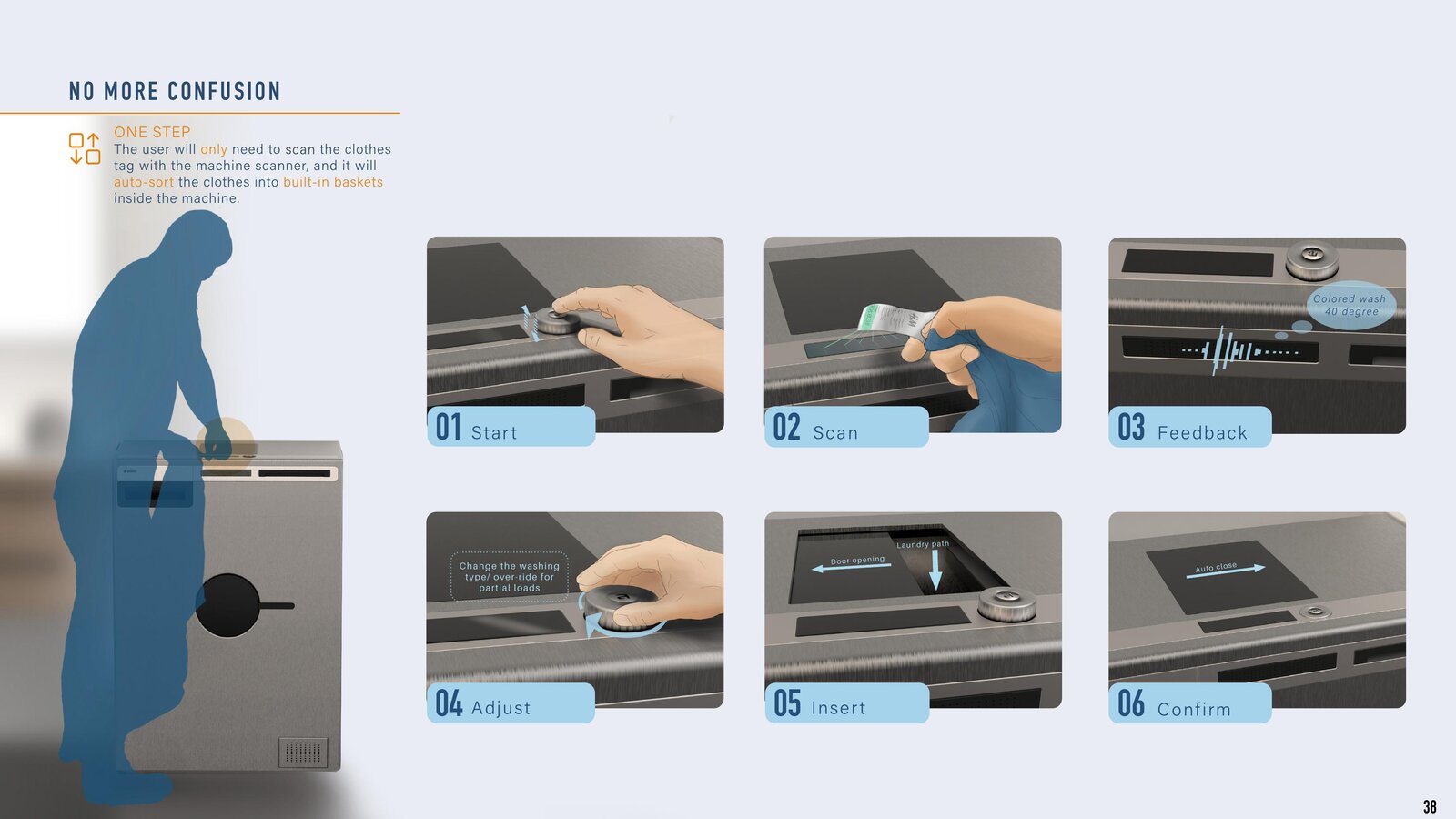
ASKO six step interaction flow, scan, feedback, adjust, insert, confirm, illustrated over the machine
The full flow, printed. Six moves. No screen to see.

Engineering the invisible

The drum absorbs the sorting.

The interface got simpler because the machine got smarter. A new drum design sorts clothes internally based on the scanned tag, opens the correct chamber when full, and returns filtered water for the next wash. The user experience became a single motion because the engineering carried the burden of choice.
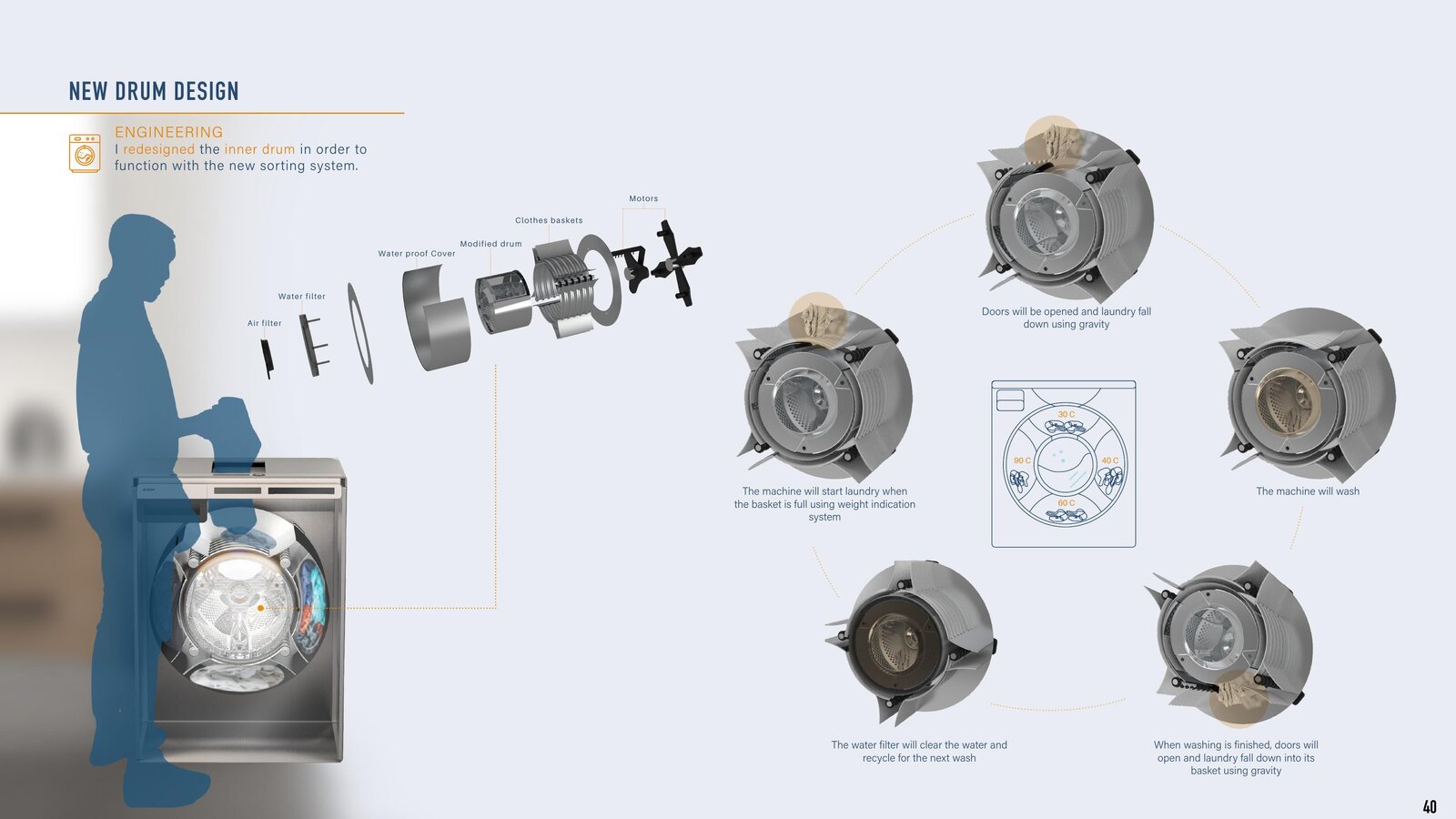
Redesigned washing machine drum with internal sorting compartments

The interface is the clothes tag. The machine listens. The person does laundry. Nothing else asked of them.
02

Machine-scale industrial · Bracke Forest

Design for the forest.

Not a hand tool. A 220 cm attachment for a Bracke replanting excavator that plants young trees at speed across cleared Swedish forest. Design for the forest is design for scale, weather and years. Steel loads. Hydraulic paths. A form language legible from ten metres away.

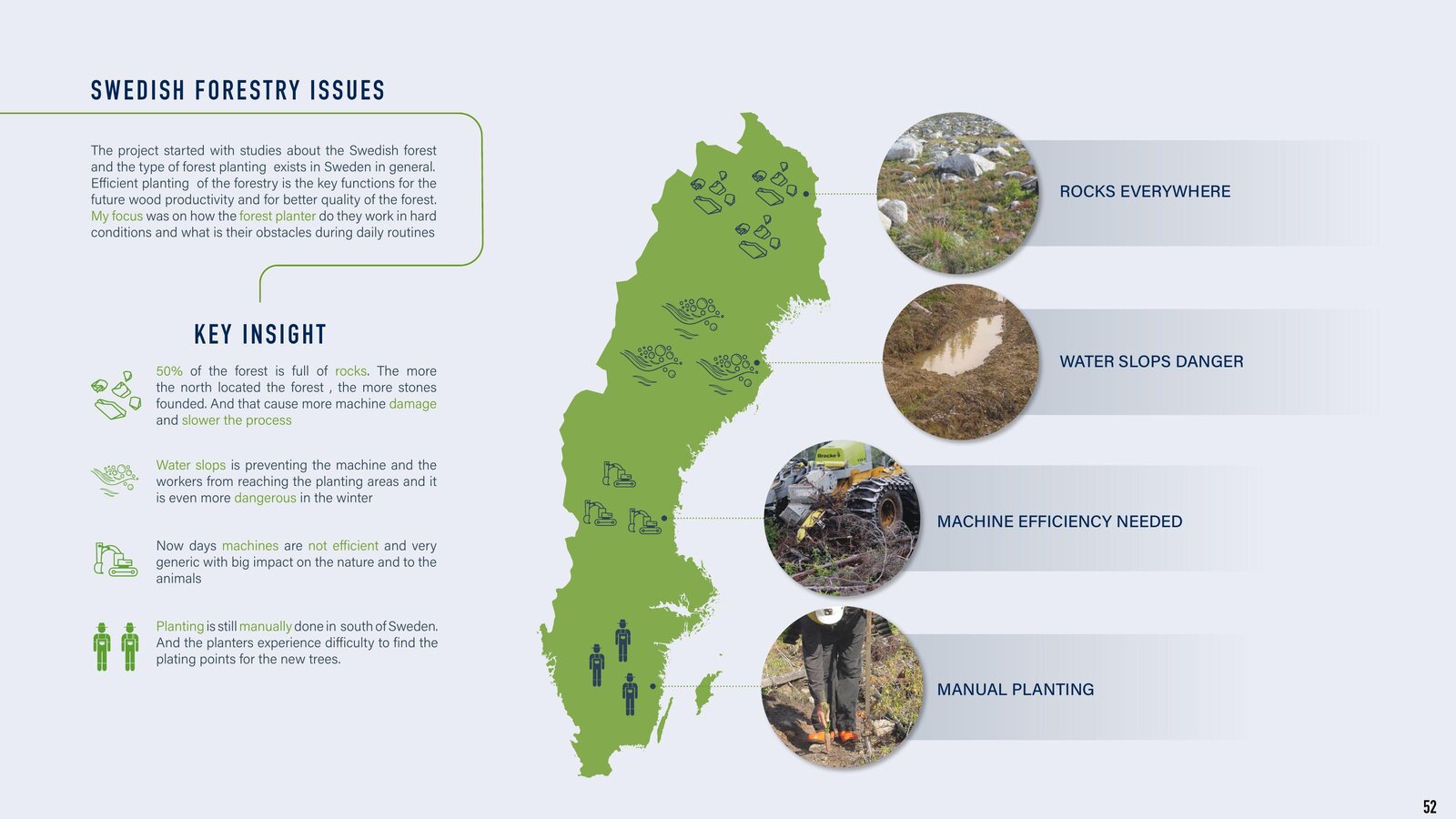
Swedish forestry, in four problems

Rocks everywhere

Half the forest floor is stones. Machines slow, blades break.

Water slops

In winter, wet ground turns dangerous. The machine sinks.

Machines are generic

Not designed for the forest. Inefficient. Rough on the trees.

Manual planting

In the south, people still plant by hand. Slow, tiring, imprecise.

Map of Sweden showing the four forestry pain points, rocks, water slops, machine efficiency, manual planting
Where the four problems live. The north is stones. The south is hands.

Tool scale

Two metres tall. Mounted on an excavator.

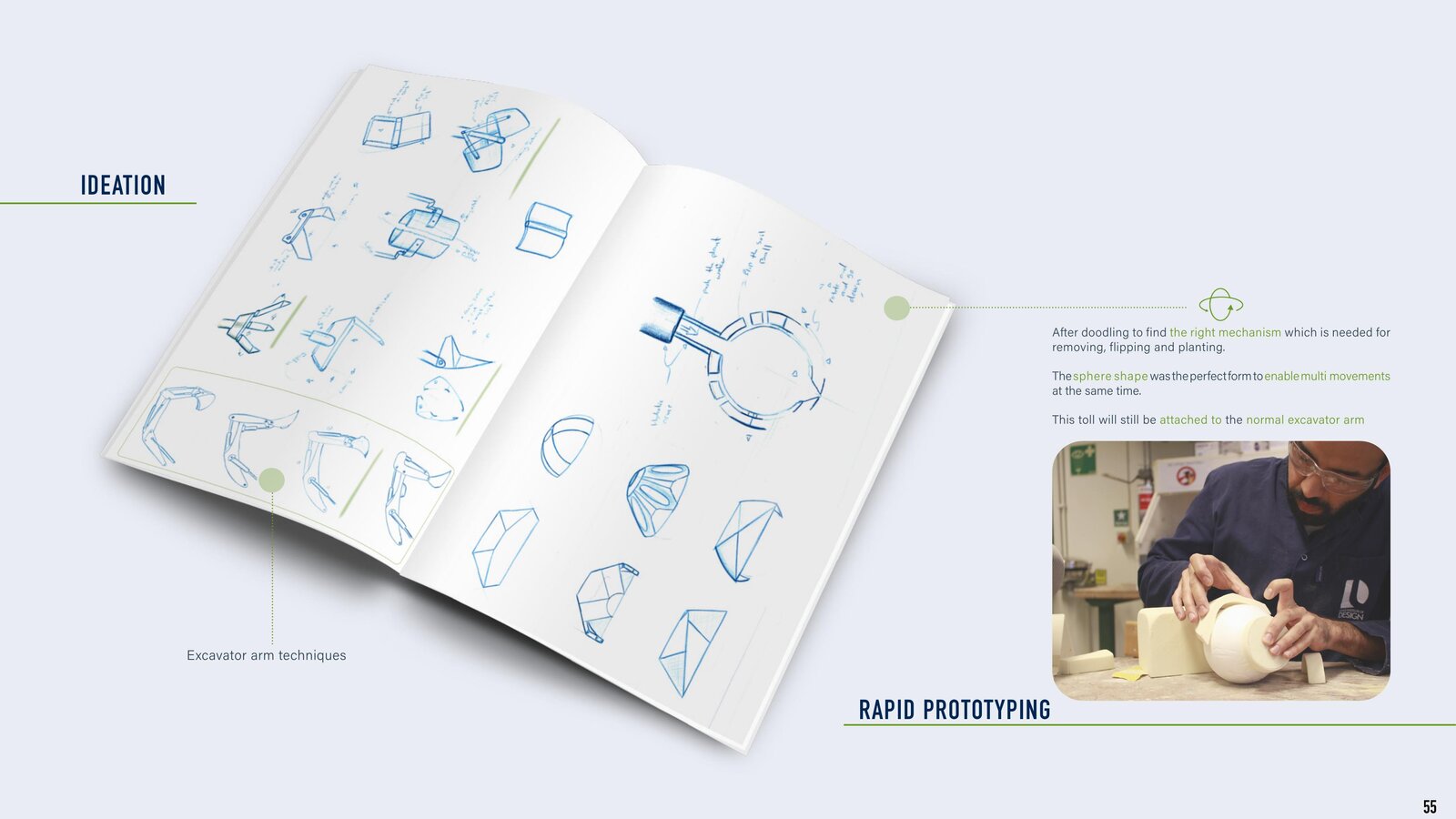
The person is drawn for scale. Everything on the excavator, from the arm hydraulics to the ball head that removes, flips and plants, was drawn to work in cold and mud.

Ideation sketches of the excavator arm and the sphere-shaped planting head, with foam prototyping
Sketching the arm. Sculpting the head. The sphere shape allowed three actions in one motion. Remove, flip, plant.

A tool that respects the trees, the rocks and the operator. The forest, replanted at machine speed, one sapling at a time.

03

Industrial rendering · AEG Powertools

Form as language.

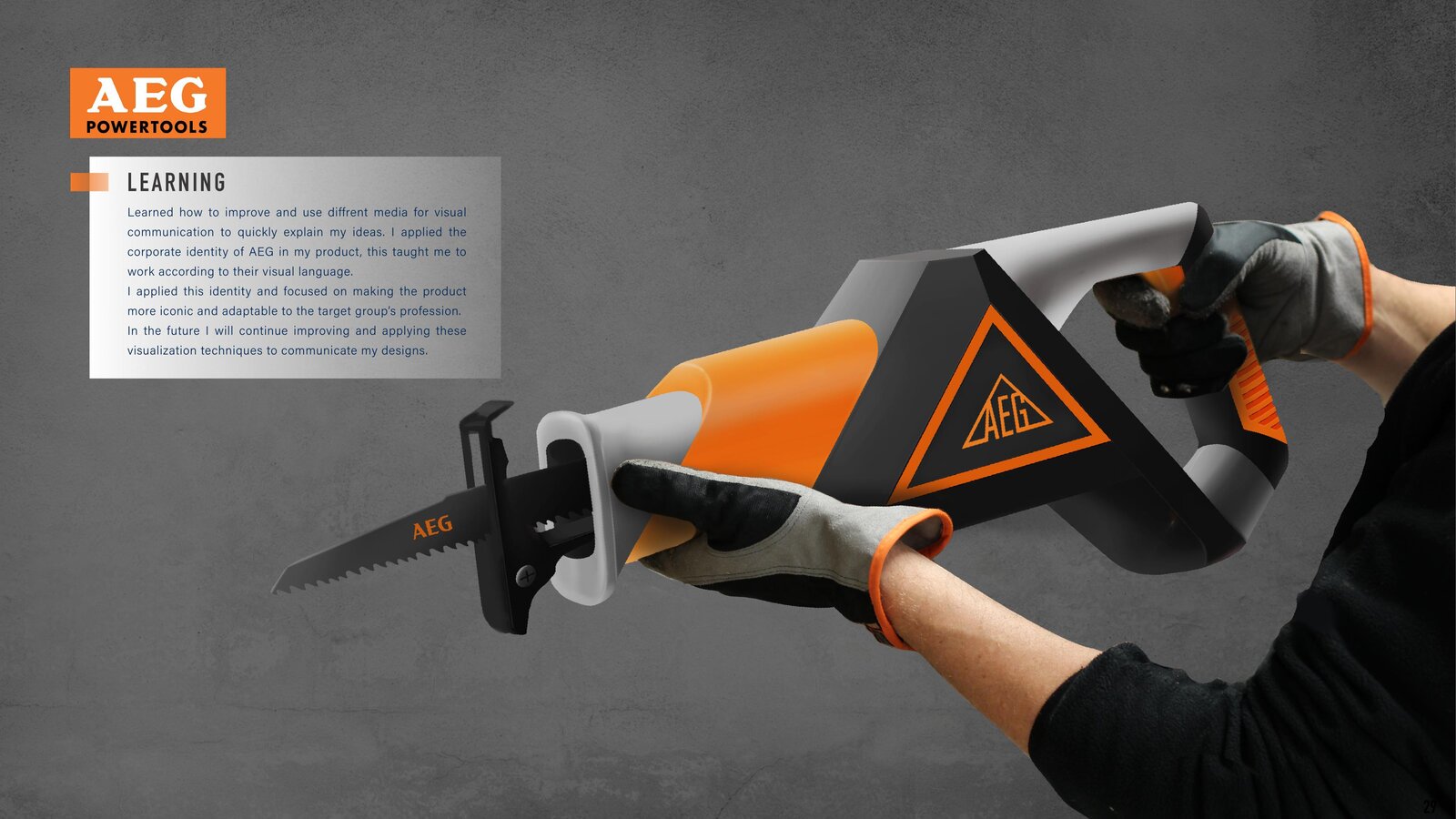
A shorter project on visual communication. Applying a corporate identity to a new product. Not to make a saw, but to learn how to speak in a brand's dialect. Orange, black, and the geometry of a tool that has already earned its own recognition.

AEG reciprocating saw, final render, gloved hand, orange and black corporate identity

What the project taught

Visual media

How to explain an idea quickly with the right medium. Sketch, render, photograph. Each tool has its own reason.

Corporate identity fluency

Working inside an existing brand system. Its palette, its geometry, its promise. Design that speaks the family's dialect.

Iconic form

A tool for the worker's profession. Recognisable from ten metres. Trusted before it is picked up.

Not every project is a system. Some are a language exercise. Both matter to the ones that come after.

Different briefs. One question. What does the person holding this really need?

The screen is optional. The person is not.